How to Write SEO Titles & Meta Descriptions That Actually Get Clicked
There’s a very specific kind of heartbreak that happens when you spend hours writing a great blog post… only for absolutely nobody to click on it in Google.
Sometimes the problem is not the content.
Sometimes the problem is the title and meta description quietly sabotaging you in search results.
You can technically rank on page one and still get ignored if your search listing sounds vague, confusing, or like it was written by a sleepy corporate intern.
Your SEO title and meta description are basically your website’s first impression in Google. They’re your digital curb appeal. Your “pick me” moment. Your tiny little internet billboard competing against ten other results all screaming for attention.
No pressure.
The good news? Writing better SEO titles and descriptions is usually much easier than people think.
First: What Are SEO Titles & Meta Descriptions?
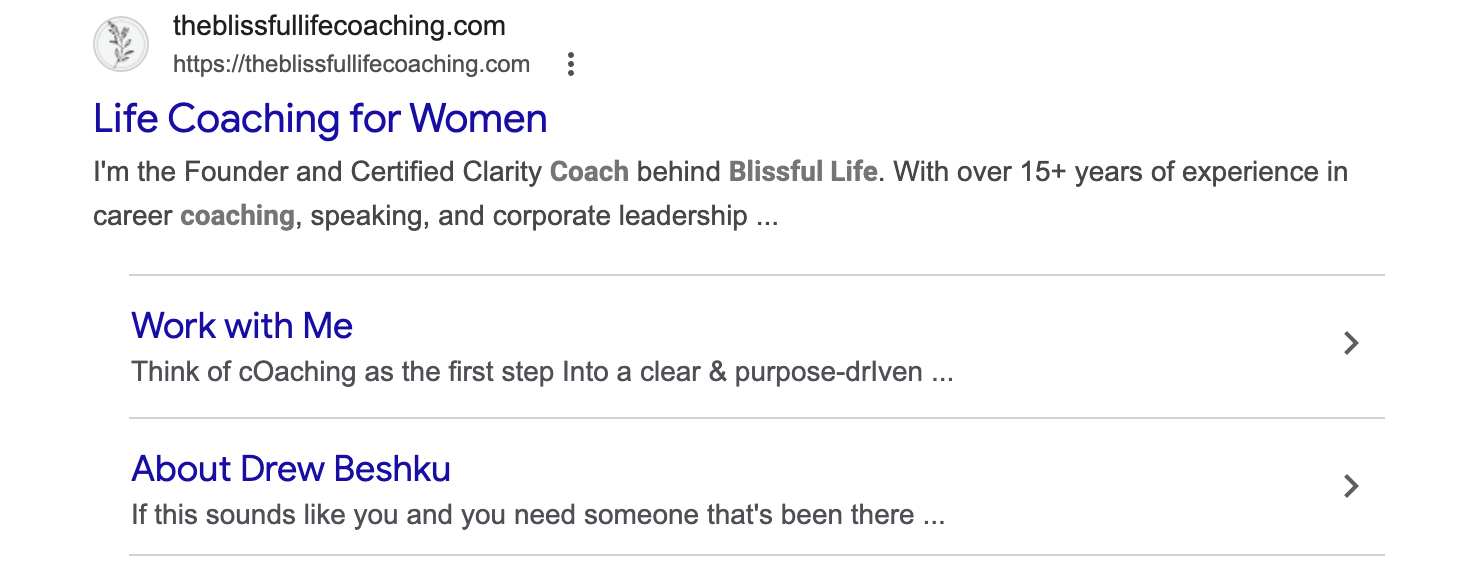
Your SEO title is the clickable headline people see in Google search results.
Your meta description is the short paragraph underneath it that summarizes the page.
Together, they help both Google and actual humans understand what your content is about before someone clicks.
And yes, this matters a lot.
Because Google is trying to figure out:
what your page is about,
whether it’s relevant,
and whether people actually seem interested in it.
Meanwhile humans are trying to decide:
“Does this solve my problem or am I about to waste my time?”
Tiny difference.
The Biggest Mistake People Make
Most business owners write SEO titles based on what sounds pretty instead of what people are actually searching for.
This is how we end up with homepage titles like:
“Welcome Beautiful Soul.”
Sounds great but…
Google has absolutely no idea whether you’re a therapist, business coach, candle maker, or part-time forest witch.
Your SEO title needs clarity first.
Not boring clarity.
Just enough information for both Google and humans to immediately understand what the page is about.
A much stronger homepage title would be something like:
“Trauma Therapy for Women in Chicago | Practice Name”
See the difference?
One creates curiosity. The other creates confusion.
Google prefers less mystery.
Stop Writing Titles for Algorithms Only
Now on the flip side, some people swing way too hard into SEO mode and end up writing titles that sound like they were generated by a malfunctioning keyword blender.
You’ve probably seen these before:
“Chicago Therapist | Chicago Therapy | Therapy Chicago | Counseling Chicago”
Please don’t do this.
Google is smarter now. Repeating the same keyword twelve times does not make you rank better. It just makes your website sound weirdly aggressive.
The best SEO titles balance:
clarity,
keywords,
and human curiosity.
Because ultimately, the goal is not just ranking.
The goal is getting clicked.
Think About Search Intent
This is where good SEO strategy really starts to separate itself from random keyword stuffing.
Before writing your title, ask yourself:
“What is this person actually trying to find?”
Someone searching:
“Midlife career change tips”
wants education.
Someone searching:
“Caregiver burnout help”
is probably looking to hire someone.
Someone searching:
“best therapist for anxiety in Denver”
wants reassurance and specificity.
Your title should match the emotional intent behind the search. That’s what improves click-through rates.
How to Structure a Strong SEO Title
You do not need a complicated formula for this.
Most effective SEO titles usually include:
the primary keyword,
a clear benefit or topic,
and sometimes a location or brand name.
That’s it.
For example: Trauma Therapy for Women in Austin | Business Name
That’s intentional.
The best SEO titles usually feel like something a real person would actually click.
Your Meta Description’s Job Is Different
Your title gets attention. Your meta description closes the deal.
A strong meta description gives people a reason to click your result instead of the seven others sitting next to it.
This is where you can expand slightly on the promise of the page.
Think of it less like a keyword dump and more like persuasive micro-copy.
For example, instead of this:
“Life coaching services for mindset coaching and life transformation.”
—which sounds like somebody swallowed a self-help thesaurus—
you could write:
“Practical life coaching to help overwhelmed women rebuild confidence, set boundaries, and stop second-guessing themselves.”
See how much more human that feels?
It still includes keywords naturally, but it also communicates value.
Keep Them Short Enough to Actually Display Properly
Google cuts off titles and descriptions that are too long.
Which means if your SEO title reads like a Victorian novel, half of it may disappear in search results.
Generally:
SEO titles should stay around 50–60 characters
Meta descriptions should stay around 150–160 characters
You do not need to obsess over exact numbers, but shorter and clearer usually performs better anyway.
Especially on mobile.
And considering approximately everyone lives on their phones now, mobile readability matters a lot.
Don’t Use the Same SEO Title on Every Page
This happens constantly on DIY websites.
Every page ends up titled:
“Home | Business Name”
or
“Services | Business Name”
Which tells Google… almost nothing.
Each page should have its own unique SEO title based on the specific topic and keywords for that page.
Otherwise you’re basically making Google play a guessing game with your website structure.
And Google hates extra work.
Emotional Language Helps Clicks
This is something many SEO articles weirdly ignore.
Humans click emotionally first and logically second.
Words like:
simple,
easy,
proven,
strategic,
beginner-friendly,
realistic,
and step-by-step
often improve click-through rates because they reduce uncertainty.
People want clarity. They want reassurance. They want to know the content will actually help them solve a problem without wasting their afternoon.
This does not mean writing clickbait nonsense. It means understanding human behavior.
Your SEO Titles Should Sound Like You
One of the biggest misconceptions about SEO writing is that your personality has to disappear.
It doesn’t. You can absolutely write optimized titles that still sound aligned with your brand voice.
Especially as a coach, therapist, creative, or service provider where connection matters. In fact, bland corporate SEO copy often performs worse because it sounds forgettable.
Your goal is clarity with personality. Not robotic perfection.
Final Thoughts
SEO titles and meta descriptions may seem small, but they have a massive impact on visibility and click-through rates.
Because ranking in Google is only half the battle.
If nobody clicks your result, your rankings don’t really matter.
The good news is you do not need to become some technical SEO wizard to improve this. Most businesses simply need clearer titles, more strategic keywords, and descriptions written for actual humans.
Tiny improvements here can create surprisingly big results over time. Especially when paired with consistent content and strong website structure.
If your website traffic feels disappointing even though your content is solid, your SEO titles and meta descriptions may be part of the problem.
I help coaches, creatives, therapists, and service providers improve their visibility.
Because “pretty” and “findable” should really be working together.
Related Posts
The Best Squarespace SEO Settings to Check Before You Launch
The Smart Way to Structure a Squarespace Website for Local SEO
Why Your Squarespace Website Feels Invisible on Google (COMING SOON)
Want to be kept in the loop and improve your website’s SEO? Join the “Search Party” newsletter!